Carpet Area vs Built-up vs Super Built-up Area Explained
By the Valuepersqft advisory team
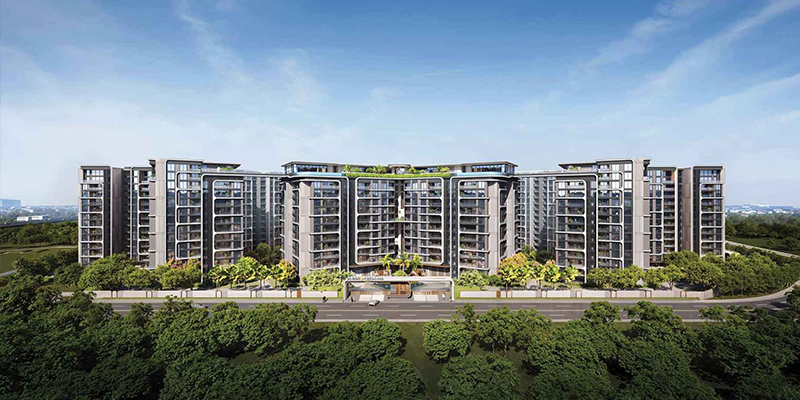
Carpet area is the floor space you can actually use inside your home, measured wall to wall. Built-up area adds the thickness of the walls and your balcony. Super built-up area adds your share of the building’s common spaces, such as the lobby, lifts, staircases and clubhouse. All three describe the same apartment, just measured in a different way, and knowing which one you are looking at makes it far easier to compare homes.
At a glance- Carpet area is the usable floor inside your walls, and RERA makes builders state it in the agreement.
- Built-up area adds the walls and your balcony to the carpet area.
- Super built-up area adds your share of lobbies, lifts, stairs and the clubhouse.
- The gap between carpet and super built-up is called loading, and it is a normal part of every apartment.
Almost every buyer we meet has seen two brochures that quote very different sizes for homes that look alike on the floor plan. Usually nothing is wrong. One builder has quoted the super built-up area and the other the carpet area. Once you can read the three numbers side by side, comparing projects becomes simple, and that is what this guide is for.
What is carpet area?
Carpet area is the space inside your apartment where you could, quite literally, lay a carpet. It covers your living room, bedrooms, kitchen, bathrooms and internal passages. It is the number that tells you how much room your family will really live in.
The Real Estate (Regulation and Development) Act, 2016, known as RERA, gave carpet area a single legal meaning across India. Under RERA, carpet area is the net usable floor area of an apartment. It excludes the area covered by the external walls, the service shafts, your exclusive balcony or verandah and any exclusive open terrace. It does include the area covered by the internal partition walls inside the apartment.
That definition matters because RERA also requires the developer to state the carpet area in the agreement for sale. So whatever number appears in the brochure, the carpet area in your agreement is the legally binding size of your home. Every RERA-registered project in Karnataka, Telangana and Tamil Nadu follows this rule.
What is built-up area?
Built-up area is the carpet area plus the thickness of the external walls, plus your private balcony, verandah or utility area. Think of it as the full footprint of your own apartment, including everything that belongs only to you.
In most modern apartments the built-up area is roughly 10 to 15 percent more than the carpet area, depending on how thick the walls are and how generous the balconies are. A home with a wide sit-out balcony or a deck will show a larger gap, and that is space many families value as much as an extra room.
What is super built-up area?
Super built-up area, sometimes called saleable area, is the built-up area plus a proportionate share of the common areas of the building or the whole project. These common areas usually include:
- Entrance lobbies, corridors and lift lobbies on every floor
- Lift shafts and staircases
- The clubhouse, gym, swimming pool deck and indoor games rooms
- Security rooms, electrical rooms and other service spaces
Each apartment is given a share of these spaces, normally in proportion to its size. That share is added to the built-up area to arrive at the super built-up area. In practice, this is the figure most brochures and price lists in Bengaluru, Hyderabad and Chennai have traditionally used.
The three areas side by side
Here is a simple illustration using round numbers. It is not taken from any one project, but the proportions are typical of a premium gated apartment community with a large clubhouse.
| Measure | What it includes | Example size (sq ft) |
|---|---|---|
| Carpet area | Usable floor inside the walls, including internal partition walls | 1,500 |
| Built-up area | Carpet area plus external walls and your private balcony | 1,700 |
| Super built-up area | Built-up area plus your share of lobbies, lifts, stairs and amenities | 2,100 |
In this example the super built-up area is 40 percent more than the carpet area. That difference is the loading, which we explain next.
What is loading, and why does it vary?
Loading is the percentage by which the super built-up area exceeds the carpet area. In the example above it is 40 percent: 2,100 divided by 1,500 is 1.4. Across the projects we work with, loading commonly falls somewhere between 25 and 40 percent, and it can be higher in towers with very large amenity spaces.
A higher loading is not a bad sign on its own. It usually tells you something about the lifestyle the project offers. Loading tends to be higher when a project has:
- A large clubhouse with a pool, gym, indoor sports, co-working rooms and party halls.
- Grand arrival spaces, such as double-height lobbies and wide, naturally lit corridors.
- More lifts per floor, including service lifts, which shorten waiting times in tall towers.
- Fewer homes per floor, where the common area is shared by fewer families.
Luxury towers with two or three homes per floor, private lift lobbies and full-floor amenity levels often carry more loading than a mid-rise block, simply because each family gets more shared space. When you compare two homes, look at the carpet area first, then ask what the loading buys you.
Which area should you compare?
Always compare carpet area with carpet area. It is the only measure that is defined the same way by law in every project, and it tells you how much room you will live in. Comparing the super built-up area of one project with the carpet area of another will mislead you every time.
Once carpet areas are lined up, look at three more things:
- Room sizes on the floor plan. Two 1,500 sq ft homes can feel very different if one has a long passage and the other uses every foot in its rooms.
- Balcony and deck space. A generous balcony adds a lot to daily life, especially in Bengaluru’s mild weather.
- What the common areas include. A larger loading that brings a full clubhouse, landscaped podium and sports courts can be well worth it for a family.
If you are weighing a luxury apartment, our guide to what makes an apartment luxury walks through the tests we use beyond the numbers.
How prices are quoted after RERA
Before RERA, prices were almost always quoted per square foot of super built-up area. RERA now requires that the price of the apartment in the agreement for sale is based on the carpet area. Many developers still advertise using the super built-up area or a per square foot rate, because that is what buyers are used to, while the agreement itself states the carpet area and the total price.
So when you look at two price sheets, the sensible step is to divide the total price by the carpet area of each home. That gives you a true like-for-like rate. Our advisors do this for every shortlist, so the comparison is clear before you visit.
The total price you pay also includes items that are not linked to area at all, such as car parking, club membership, the maintenance deposit, GST on under-construction homes and the registration costs at the end. Our guide to stamp duty and registration charges covers the last of these city by city.
How to read a floor plan in five minutes
Floor plans are the best way to understand the size of a home, and they become easy once you know where to look.
- Find the carpet area figure. Most RERA-era floor plans print it clearly. If you see only one number, ask whether it is carpet or super built-up.
- Check the room dimensions. They are usually shown in feet and inches, for example 12’0″ x 14’0″ for a bedroom. A living room of around 13 by 20 feet comfortably holds a sofa set and dining table.
- Note the balconies. They are part of the built-up area, not the carpet area, so a plan with large balconies will show a bigger gap between the two numbers.
- Look at the shape. Square, well-proportioned rooms use space better than long, narrow ones.
- Trace the light. Count the windows and see which way they face. Cross ventilation and natural light make a home feel larger than its square feet.
Area terms you will hear on site visits
A few more terms come up often when you visit projects in Bengaluru, Hyderabad and Chennai.
Plinth area
An older term used mostly for independent houses and some government schemes. It is close in meaning to built-up area: the covered area of the building at floor level, including the walls.
UDS, or undivided share of land
Every apartment owner also owns a share of the land on which the project stands, held jointly with the other owners. This is the UDS. It matters especially in Chennai, where it is common for the land share to be shown separately in the documents. A larger UDS is generally a good thing for long-term value.
Villa areas: plot area and built-up area
For villas and row houses, two numbers matter: the plot area, which is the land you own, and the built-up area of the house itself across all its floors. A 4 BHK villa might sit on a 2,400 sq ft plot with a built-up area of around 3,800 sq ft spread over three floors. If you are choosing between the two formats, browse our villas in Bangalore and villas in Hyderabad.
FSI or FAR
The floor space index, also called floor area ratio, is the total floor area a developer may build on a plot, divided by the land area. A higher FSI allows taller buildings or more homes on the same land. It is useful background when you compare a low-rise community with a tall tower.
Examples from homes we track
Size ranges on our project pages use the figures the developers publish, which are usually super built-up areas. They give a good feel for the kind of home each project offers. A few examples across our three cities:
- L&T Elara Celestia in Hebbal offers homes from about 1,500 to 3,200 sq ft across three towers.
- Brigade Insignia in Yelahanka goes from 3 and 4 BHK homes up to duplex penthouses of nearly 5,950 sq ft.
- My Home Avali in Tellapur has large homes of about 3,000 to 3,600 sq ft in 46-floor towers.
- Brigade Stellaris in Velachery, Chennai ranges from about 2,000 to 6,800 sq ft.
- Prestige Pine Forest on ECC Road, Whitefield has homes of about 2,750 to 3,550 sq ft.
For each of these, our advisors can share the carpet area of the specific unit you like, along with the floor plan, so you can compare like with like. You can also browse the full range of luxury apartments in Bangalore, luxury apartments in Hyderabad and luxury apartments in Chennai.
Our viewWhat we tell our clients
Start with the carpet area, because it is the size of the home you will live in and it is fixed in your agreement. Then look at what the rest of the super built-up area gives your family: the clubhouse, the lobbies, the green spaces and the ease of daily life. A well-planned home with good light and generous shared amenities often feels larger than a bigger number on paper. Share the projects you are considering and we will lay out the carpet areas, floor plans and total costs side by side.
Compare homes with an advisor →
Frequently asked questions
What is the difference between carpet area and built-up area?
Carpet area is the usable floor inside the walls of your apartment. Built-up area adds the thickness of the external walls and your private balcony or utility area, so it is usually around 10 to 15 percent larger.
Is super built-up area the same as saleable area?
Yes. Super built-up area and saleable area mean the same thing: the built-up area of your apartment plus a proportionate share of the common areas such as lobbies, lifts, staircases and the clubhouse.
What is a normal loading percentage in Bangalore?
In most gated apartment communities, the super built-up area is about 25 to 40 percent more than the carpet area. Projects with large clubhouses, grand lobbies and fewer homes per floor tend to be at the higher end.
Does RERA require builders to sell on carpet area?
Yes. Under RERA, the agreement for sale must state the carpet area of the apartment, and the price is linked to it. Advertisements may still mention super built-up area, but the carpet area in your agreement is the legally binding size.
Is a balcony included in carpet area?
No. Under the RERA definition, an exclusive balcony or verandah is not part of the carpet area. It is counted in the built-up area and the super built-up area.
How do I calculate the real price per square foot of carpet area?
Divide the total price of the apartment by its carpet area. For example, a home with a total price of one crore and a carpet area of 1,500 sq ft works out to about 6,667 rupees per square foot of carpet area.
More guides from our advisors- What Makes an Apartment Luxury? 7 Tests to Use
- A Khata vs B Khata vs e-Khata in Bangalore
- How NRIs Can Buy Property in India: A Guide
- Chennai vs Bangalore vs Hyderabad: Where to Buy
By the Valuepersqft advisory team Property advisors across Bengaluru, Hyderabad, Chennai, Pune and Mumbai for 8+ years, working with 40+ developers and 500+ projects.
Details are taken from public sources and developer information and may change. Please confirm current availability, prices and approvals with our team before making a decision.
Talk to a Valuepersqft advisor
Honest, unbiased property advice. Call +91 6366229758, email support@valuepersqft.com or book a free consultation.
Offices: Whitefield, Bengaluru · Nanakramguda, Hyderabad · Manapakkam, Chennai · Kharadi, Pune.